










2026 | 19. March
Visual Design at JEFF – Good design is not a matter of taste
What potential does the field of visual design hold, and what happens when visual decisions are driven by personal taste?
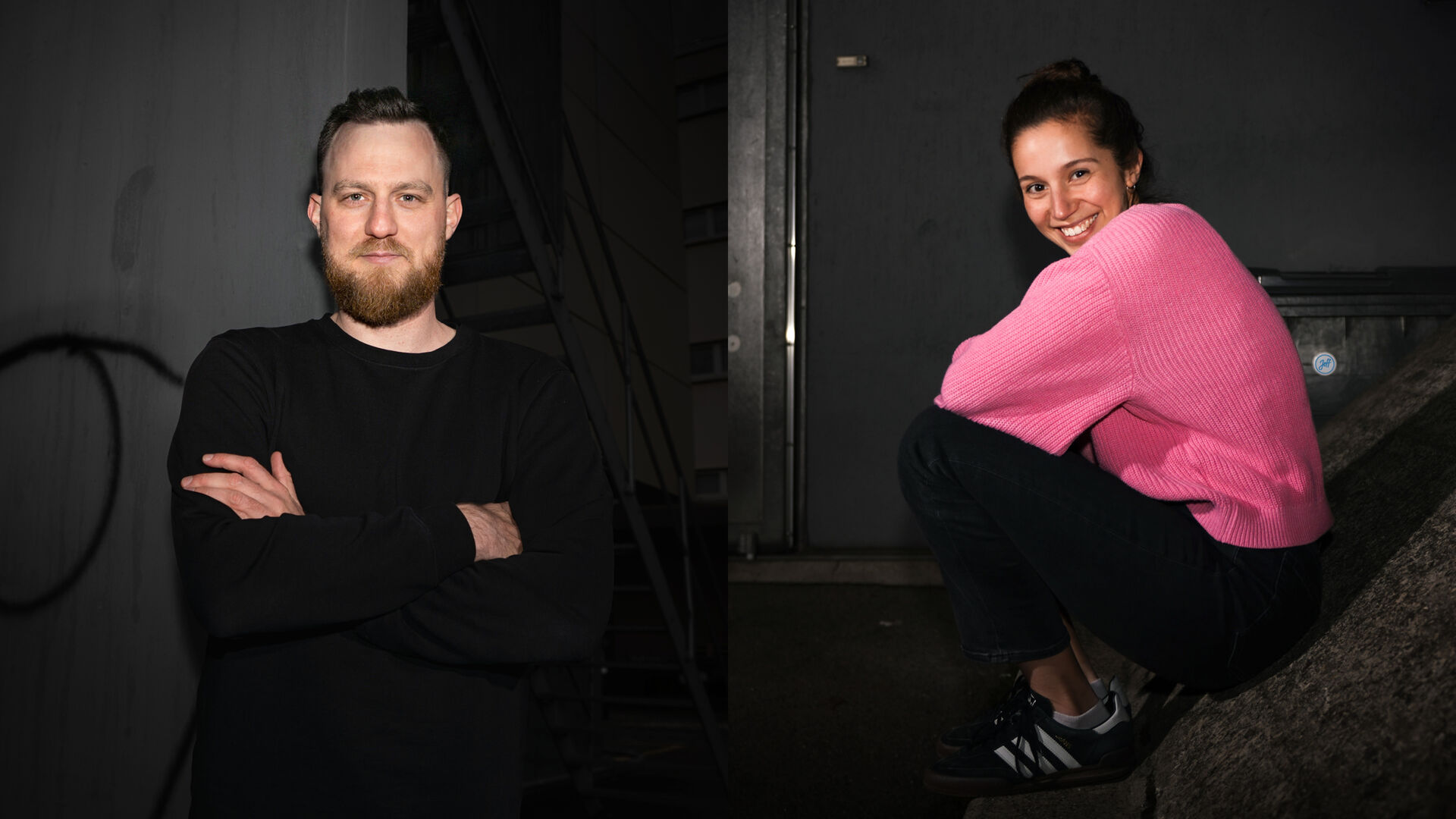
In the interview, Stephan Gimmi (Head of Design | Partner) and Nadine Rupprecht (Art Director) talk about why rebrandings do not start with new colours, but with identity and attitude, and how to recognise when it is time for a new visual presence.
What does Visual Design at JEFF encompass, and how is the team structured?
Stephan: Visual design has always been a central pillar for us. From corporate designs and redesigns to visual worlds, art direction, editorial design, user interfaces and complex design systems. From the first scribble to the final application, we handle virtually everything inhouse. Our design team is a diverse mix of personalities, but what unites us is a solid design education, extensive experience and high quality standards. And because good design needs a future, we also train apprentices.
What is visual design, and why is it important for companies?
Nadine: The philosopher Paul Watzlawick said: «One cannot not communicate».
Visual design determines whether this communication happens consciously, clearly and purposefully or randomly. Good design therefore translates content in a way that makes it readable, tangible and relevant.
Especially in a world where attention is scarce and interchangeability is high, visual design is not a decorative add-on, but a central lever in brand management.
Stephan: Leaving visual communication to personal taste is therefore not a stylistic decision, but a strategic risk.
Why are design decisions often discussed in terms of «I like it» and «I do not like it»?
Nadine: In most cases, there is no shared foundation for clear branding. That is why many of our projects do not start with colours or fonts, but with fundamental questions: What does the organisation stand for? How does it want to be perceived and how is it actually perceived? Only when this foundation is clear does design truly make sense and become effective.
Stephan: That is why we often start with a joint workshop. And even afterwards, brand work remains a collaborative process that thrives on dialogue. We see our role as structuring and translating: we guide through the phases, make decisions transparent and create a framework in which development can take place.
Anyone who leaves visual communication to personal taste is not making a stylistic decision, but taking on a strategic risk.
Anyone who leaves visual communication to personal taste is not making a stylistic decision, but taking on a strategic risk.
Why is it so important that design makes an organisation’s identity visible?
Stephan: Design creates access. It makes an attitude easy to grasp and provides orientation. Especially in complex markets, this is not a nice-to-have, but a competitive advantage. And if a brand cannot be clearly positioned, it quickly becomes interchangeable or is forgotten.
Rebranding: when and why is it worth taking a closer look?
Stephan: It is often worthwhile when something has changed, but has never been consciously realigned. Typical triggers for a rebranding are leadership changes, anniversaries, strategic repositioning or transformations, including those that unfold gradually over many years.
In most cases, it starts with a diffuse feeling that becomes more tangible through certain symptoms: touchpoints feel inconsistent, decisions turn into matters of taste and external perception no longer matches internal ambition. A rebranding brings all these levels back into alignment.
Nadine: At the same time, it has a strong internal impact. A clear understanding of the brand fosters identification, pride and a sense of belonging among employees. A rebranding is therefore not just a «new look», but often also a process of internal clarification.
What fascinates you personally about (re)brandings?
Stephan: The most exciting moments are when something unclear suddenly takes shape. When clients realise during the process what their brand actually stands for or what it could stand for. In rebrandings, it is often the moment when the «dust settles» and the previously unused potential becomes visible.
Nadine: Branding translates identity into a system of decisions and design is the execution of those decisions. What fascinates me is when this clarity results in a coherent and distinctive character and ultimately in a presence that endures for years.
Your advice to organisations considering a rebranding?
Nadine: A rebranding is rarely the radical break people imagine. It is often more about evolution with appreciation for what already works and about addressing what is long overdue: making decisions visible and ensuring consistency.
So if your organisation is becoming more complex, but your brand still looks like it did five years ago, your reality is clearly evolving faster than your visual identity. And that is worth changing.
Contact
Stephan Gimmi
Head of Design | Partner
